Sunday, December 20, 2020

In Defense of the Blog

This is the age of social media. Instagram. Twitter. Facebook. YouTube. The quip, the hot take, the alluring image. Likes, click-throughs, and shares are the currency of the realm.

But there is still a great need for the humble, stodgy, curmudgeonly blog. 

While great work is being done by scholars and others on Twitter, the format doesn't work well with long-form pieces, and social media drama (status signalling, call-outs, etc.) tends to drown out the signal with too much noise. And certain platforms, such as Facebook, are difficult to search and don't seem to function well as a digital archive for important information. 

Medium is perhaps an exception to the general trend toward short and noisy communiques. The platform is designed for the long-form essay; but it still seems rife with clickbait titles and mostly vapid posts. Perhaps this is because Medium uses algorithms to direct users' attention to other posts in order to sustain their engagement, much like YouTube does for videos. 

In any event, here are a few fine examples of active (or recently active) blogs that show the medium's great potential as a platform for sophisticated thought and analysis:

  • Marginal Revolution: Two George Mason economists discuss economics, policy, the arts, and more. 
  • Slate Star Codex: Brilliant analysis by "Scott Alexander." Currently in hibernation because of drama with the New York Times, but, as the saying goes, "that is not dead which eternal lies, and with strange eons even death may die."
  • Applied Divinity Studies: A worthy successor to Slate Star Codex. Applies critical thinking and statistical analysis to vexing problems. 

My own colleague at Pasadena City College, Ed Feser, has been hugely successful at making his personal blog a platform for sharing his (conservative Catholic) political, religious, and philosophical views, and his blog serves as a gathering place for people of like minds. This is yet another example of the conintuing power and relevance of blogging as a medium.

When I look at my online reading, much of it is still of blogs, accessed through Feedly (an RSS aggregator). I imagine there are still many journalists and perhaps some academics who are similar in their information consumption habits.

In addition to a decline of blogs due to the new (and relentless) attention economy that drives what happens on the internet these days, there also seems to be an issue of popularity or fashionability. People follow trends and imitate what other people do and believe, especially people they perceive to be of higher social status. It's no longer cool, fashionable, hip, or trendy to blog. Sadly, this loss of social status of blogs seems independent of their actual usefulness or functionality.

(On a related note, a similar case could be made for the continuing relevance of the humble, stodgy, curmudgeonly, and decidedly unfashionable internet discussion forum or bulletin board. A lot of useful and focused work is still being done on forums in obscure corners of the internet.)

Because of all this, it is my sincere hope that the great thinkers and makers of our time return to blogging, or that they start blogging, if they never experimented with it before. We need a blogging Renaissance.

Also because of this, I have decided to start blogging again, using my old personal blog. I may not find much of a readership, but it seems like a better place for sticking my random thoughts and lists of links and resources (mainly for students) than private emails or the social media cesspit. So here we go.

Saturday, May 07, 2016

Rebranding Philosophy

In order to survive the current and future rounds of purges in the arts and sciences, it would seem that philosophy needs some serious rebranding.

When most people think of 'philosophy', they think of one's general attitude towards life, or other such fuzzy, airy-fairy ideas.

My proposal: When selling philosophy to our administrative, political, and corporate overlords, characterize philosophy as THE discipline of logic and critical thinking.

The evidence is somewhat equivocal, but after reading Richard Arum and Josipa Roksa's Aspiring Adults Adrift: Tentative Transitions of College Graduates, one of their general findings is the importance of student gains in critical thinking and complex reasoning ability when it comes to predicting their success post-graduation on numerous measures (including employment, income, financial independence, marriage, and civic engagement, among others).

Because of its intense focus on formal and informal logic, philosophy is uniquely suited to help train students in these important skills.

Sunday, May 01, 2016

Student Rape and the Incentives of University Administrators

"Two Kansas State University students say the university, in apparent violation of federal guidelines, refused to investigate their rape complaints."  This seems to be a common story when it comes to students seeking redress through a university for on-campus or off-campus rapes. (In this case, the rape occurred at an off-campus frat house.) Let's get the word out: If you're raped by another student on or off-campus, don't seek redress through the university. They have an incentive to ignore your complaint, both to avoid the expense and hassle of an investigation, and to protect their public image. Report the rape to the police immediately, and hire an attorney. Be prepared to bring civil suits against the perpetrator, the fraternity (if relevant), and the university. Then things might start to change.

"The Case Against Reality"


That is the title of an Atlantic interview with professor of cognitive science Donald D. Hoffman. The interview seems to conflate three different issues: (1) whether reality is observer-dependent; (2) the entanglement of quantum states; (3) whether living creatures have accurate perceptions or adaptive perceptions.

I don't know much about quantum mechanics, but evidently quantum entanglement does not entail an observer-dependent reality, despite this widespread belief (at least among the public and among purveyors of popular science). An easy way to see the difference is that quantum entanglement happened even before there were biological organisms observing the world. Macro-level observations of phenomena are not required by quantum entanglement. (Quantum entanglement is about the mutual dependence of the states of different quantum particles, such that the state of each particle cannot be described independently of the states of the others.)

Secondly, the issue of whether humans and other organisms that evolved through natural selection have adaptive perceptions rather than accurate perceptions is fascinating, but it seems irrelevant to quantum entanglement. It's true that human perception of objects as independent realities does not correspond to the quantum mechanics picture of reality, but then again neither does it correspond to the general relativity, nor even to Newtonian physics (e.g., inertial motion).

Even when we discuss the narrow issue of whether ordinary objects really exist, it would seem that classical physics also undermines realism about ordinary objects, because of the view that such objects are completely reducible to atoms or other constituent particles, and so have no independent causal powers or other real-making features. Quantum mechanics does pose special challenges or realism about ordinary objects, but it is by no means unique in this regard.

The issue of realism about ordinary objects has been discussed for a long time in philosophy, and I think cognitive scientists and popular science writers would benefit by examining this literature before holding forth about the metaphysical implications of quantum mechanics, neuroscience, and so on.

In addition, at the end of the interview, Hoffman posits conscious experiences as ontological primitives (i.e., the basic constituents of reality). It's true that conscious experiences could be distinct from our perceptions of ordinary objects, and thus realism about the former does not imply realism about the latter, although presumably this would require that conscious experiences not include experiences of real objects (such as if the conscious experiences are constituents of perceptions of real objects).

But there are two confusing things about this proposed ontology. The first is that the ontology of conscious experiences is incompatible with the initial argument given for the claim that we don't perceive reality. The initial argument was that our perceptions of real objects do not accurately reflect quantum entanglement. The presumption was that quantum phenomena are the basic constituents of reality. But now Hoffman is saying that conscious experiences, not quantum phenomena, are ontologically primitive.

The second confusing thing with Hoffman's proposed ontology is that it doesn't seem to fit with his claim that our perceptions are adaptive but not accurate. Assuming that our perceptions are composed of conscious experiences, how could they fail to be accurate (at least in some sense), if they include the fundamental constituents of reality? Technically, the perceptions would not be accurate as representations of reality, because they themselves contain reality. But still, this is a different picture which makes the initial claim look like a bait and switch.

I am left wondering if I am the one who is fundamentally confused here, or if it is Hoffman, or the interviewer, or all of the above. But this sort of confusion is typical when non-philosophers try to talk about metaphysics or other philosophical questions (ahem), which makes me realize the value of philosophy as a discipline (even if we maybe we do have more philosophers than we need and could do with more doctors or nurses, for example :) ). I am left almost happy about the terrible conceptual muddle that seems to be contained in this article, because at least it shows that there is a need for philosophy to help untangle the conceptual knots or unclog our conceptual plumbing.

Sunday, March 20, 2016

A Warning Regarding Nature's P-Value Warning

Source: Wikipedia

An article recently appeared in Nature which reports on a warning issued by statisticians about the misuse of p-values. The article focuses on two common problems regarding p-values: (1) Misinterpreting a p-value of .05 as indicating that there is a 95% chance that the test hypothesis is true; (2) Mistaking statistical significance as a measure of practical importance, or otherwise excessively relying upon p-values when engaged in critical thinking about the meaning and value of the results of a study.

However, the article itself risks confusion in two ways: First, by not clearly explaining the phrase 'at least as extreme as' when it gives the standard definition of a p-value of .05 (used as the criterion for statistical significance): "it signifies that if the null hypothesis is true, and all other assumptions made are valid, there is a 5% chance of obtaining a result at least as extreme as the one observed."

The second way in which the article risks confusion is by not clearly distinguishing between two methodological problems surrounding p-values: (1) There is widespread confusion about the meaning and implications of p-values; (2) There is widespread disagreement about the theoretical and practical importance of p-values when it comes to interpreting and evaluating the results of experiments or other scientific studies.

Nevertheless, it is refreshing and illuminating to see scientists engaged in this thought-provoking discussion about scientific methodology, and I hope it continues.

Saturday, February 27, 2016

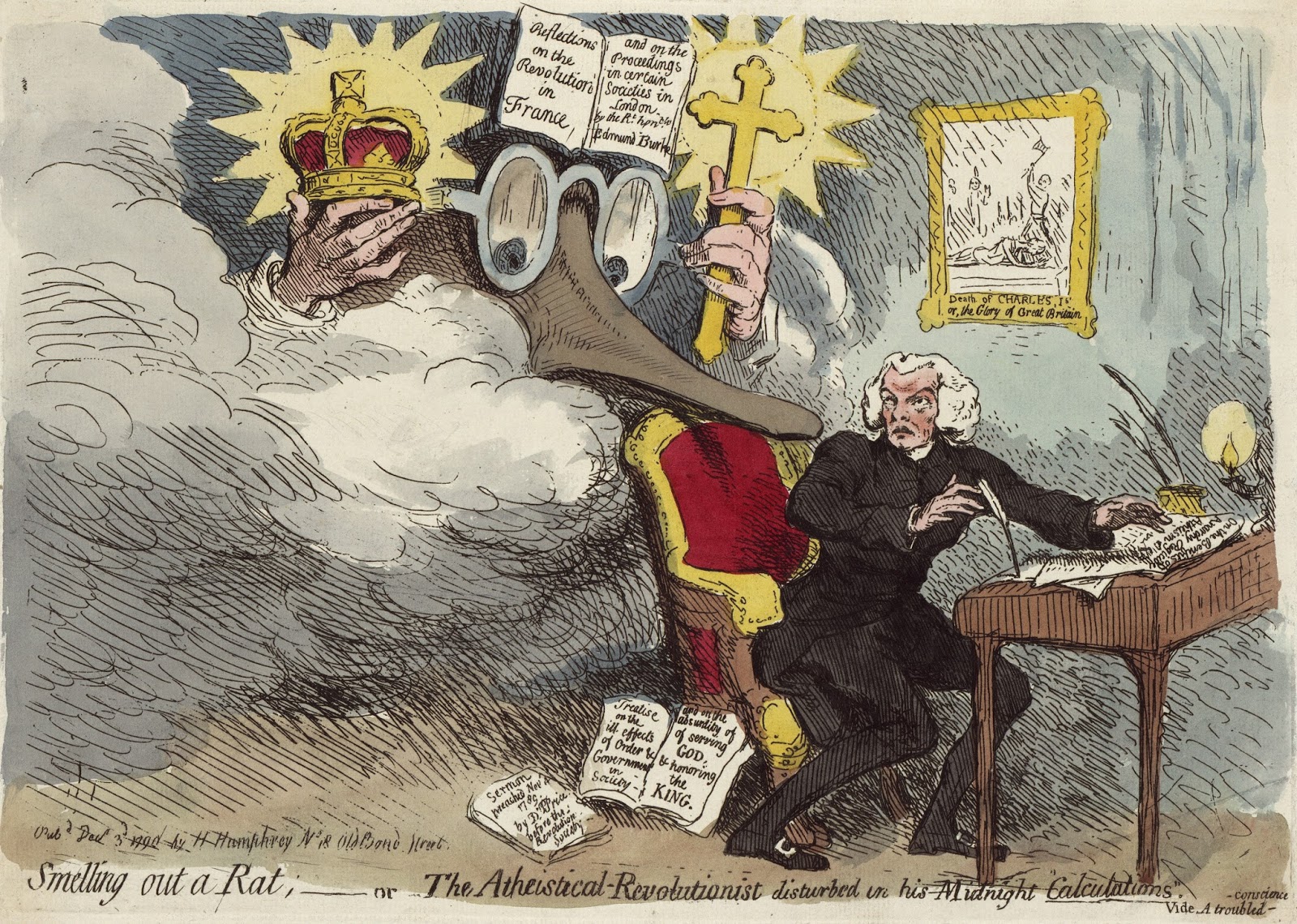
The Continuing Relevance of Edmund Burke's Political Thought


I recently started re-reading Burke's Reflections, and was struck by the continuing relevance of his argument to today's debates over social justice. I'm surprised that more political philosophers have not attempted a serious appraisal of his work. A former colleague recommended Yuval Levin's book, but it seems primarily intended for a popular audience.

There is also a convergence between Burke's view of the wisdom of inherited traditions and recent work on the evolution of human culture--I'm thinking specifically of Joseph Henrich's The Secret of Our Success. Henrich argues, inter alia, that the capacity to learn a culture is an evolutionary adaptation, and that a crucial element of this capacity is the ability to have faith in customs for which there is no known rational justification. Humans learn their society's culture largely by imitating others, with preferential imitation of people of high status.

An example that Henrich gives that has a Burkean flair is the set of customs practiced by some South American cultures related to the processing of manioc, a tuber which is a staple of their diet. The Tukonoan people, for example, engage in five separate practices--scraping, grating, washing and separating, boiling, and waiting two or more days--that involve great time and effort, but that greatly reduce the quantity of neurotoxins in the manioc--even though none of the Tukonoans have a rational justification for any of the practices, nor are they even aware of the presence of neurotoxins in the manioc. Ex hypothesi, many human customs and social institutions are similarly functional, even though we don't know what function they serve nor how they serve it.

Of course, there are presumably some "junk" customs and institutions in the mix, but attempting to institute radical, revolutionary change is seemingly bound to cause great harm and destruction by weakening or eliminating vital customs and institutions. This is relevant, too, to U.S. attempts to "nation build" in ways that do not sufficiently heed the matrix of existing customs and institutions in other societies.


Saturday, February 20, 2016

Choosing a Major and Pursuing a Career

I recently put together some links for students who are seeking advice about choosing a major or pursuing a career. Here they are, with my summaries and comments, listed from most to least recent:

1. "The New College Degrees" (2016/02/04): Blog post by economist Alex Tabarrok about students choosing majors (such as psychology) for which there are few jobs, and about the small number of students choosing majors for which there is a greater need.

2. “Salaries of Philosophy Majors Over Time.” (2015/09/04): Daily Nous blog post which compares average salary for philosophy majors to average salary of other humanities majors. However, several caveats are in order: (1) The list only includes humanities degrees—there are many non-humanities degrees with higher expected incomes. (2) The cause of the high expected income for a philosophy degree is probably NOT the philosophy degree itself. It is much more likely that the cause of the high expected income for philosophy majors is that people who are more intelligent and who are from a higher socioeconomic class are both more likely to earn more and more likely to major in philosophy. Majoring in philosophy will probably not itself make you much more intelligent or raise your socioeconomic class.

3. "Economists Offer These 10 Career Tips for Today's Graduates" (2015/05/22): Sensible, data-driven advice on how what factors relevant to pursuing a career after graduation. Many of these can be acted on before you graduate.

4. "Economists Say Millennials Should Consider Careers in Trades" (2015/02/04): NPR story on how learning a trade can be much cheaper than going to college and yet pay more in terms of ability to get a job and expected income. The fact that non-college options exist should help you assess the costs and benefits of paying for your college education, in terms of time, money, and effort.

5. "Your College Major Is a Pretty Good Indication of How Smart You Are" (2015/02/13): Quartz article on how choice of major correlates with measures of intelligence. Intelligence probably causes people to choose certain majors, rather than the majors causing people to have a certain level of intelligence. Philosophy majors do tend to be smarter than the average bear, but this is probably because more intelligent people are more likely to choose philosophy.

6. "A Philosophy Degree Earns More Than an Accounting Degree" (2015/01/30): Yahoo Finance article which ranks humanities degrees in order of expected income. Philosophy is #1. However, the same caveats apply to this article as to the Daily Nous link on philosophy salary given above.

7. "The Social Science Guide to Picking a Career You'll Love" (2014/12/30): Vox article on how to choose a career that will give you greater life satisfaction, according to social science research. One of the pieces of advice is that salary is overrated. This makes sense to me, but at the same time you need to have an accurate understanding of your expected income after graduation and how that relates to your debt and other financial obligations.

8. "A Bit of College Can Be Worse Than None at All" (2014/10/13): Wall Street Journal article on students who fail to finish college, and how they can be worse off than those with no college, because of the debts they rack up and the opportunity cost of having less workplace experience.

9. "Generation Jobless" (2011/11/09): Wall Street Journal article on students who pick easier majors (such as in the humanities and social sciences) even though it's harder to find jobs, and the jobs one can find generally pay less.

Sunday, January 17, 2016

David Chapman on Buddhist Romanticism


Chapman also explains that the Illuminatus Trilogy was mainly intended as a critique of Eric Voegelin and the right-wingers of the 1960's and 70's who were influenced by his critique of communism, fascism, and other authoritarian utopian movements.

Tuesday, January 05, 2016

What Is the Theological Basis for Wheaton College's Decision to Fire Larycia Hawkins?


This Washington Post article attempts to clarify the theological issues surrounding Wheaton College's decision to fire Larycia Hawkins, but I remain confused after reading it. 

According to the article, Wheaton College decided to fire Professor Hawkins on account of her statement that Muslims and Christians worship the same God, and on account of the fact that Muslims and Christians have different views of the nature of God. Specifically, Christians believe in the doctrine of the trinity, while Muslims do not.

The problems with this explanation are twofold. The first is that not all Christians are Trinitarians, but non-Trinitarian Christians (such as Unitarians and Jehovah's Witnesses) are usually regarded as worshiping the same God as Trinitarian Christians. The second is that, more generally, it seems that Muslims and Christians (or members of any religion) could worship the same God (i.e., the same divine being) even if they have different theories about his nature (i.e., different accounts of the essence of that being). It is logically possible for different people to have an attitude towards or relationship with the numerically same being even if they have different beliefs about the being's ultimate nature. By analogy, a brother and a sister could both love their father if they had different beliefs about their father's character, or even about his underlying nature as a substance.

In fact, Muslims claim to worship the same God as Jews and Christians (the God of Abraham), they accept all of the same patriarchs and prophets as Jews and Christians (excepting only Muhammad), and they even accept that Jesus is the Messiah--so it is difficult to make sense of the claim that Muslims do not worship the same God as Christians. There are many disagreements between Muslims and Christians, but they do not appear to be in disagreement about which God they worship. (The matter is otherwise, for example, with Hindu monotheists, who do not universally identify the one God they worship with the God of the Hebrew Bible.)

Having said that, it is well within the rights of Wheaton College to fire a faculty member for not adhering to their theological requirements, but it seems they should do a better job articulating what those requirements are and how Professor Hawkins has violated them. 

What is made clear by the Washington Post article is that there have been several previous incidents in which Hawkins has offended the scruples of Wheaton College administrators, but the previous issues have more to do with politics and morals than with theology per se. Wheaton College should have the legal right to fire faculty who do not maintain their preferred political or moral beliefs, but it seems disingenuous to fire someone over an alleged theological dispute if the real problem lies elsewhere.

Update: Edward Feser already tackled this issue in much greater depth at his blog, and again in a recent post.

Sunday, December 20, 2015

The Star Wars


I do not plan on seeing the latest Star Wars film that everyone is so excited about.

I was intensely devoted to the series as a youth--so much so that I have, to this day, most of the dialogue of the original three films memorized. The films completely dominated my childhood imagination and toy-collecting. Later, I read the novelizations, some of the comic books, and listened to the (surprisingly good) radio adaptation of the film.

This great well of enthusiasm for The Star Wars was steadily diminished, and then actually transmuted into an equally intense revulsion, through the strange alchemy of the Star Wars prequels.

I have no doubt that Disney and J. J. Abrams have succeeded in producing cinematic fare that is less infuriatingly awful than Episodes I to III of the Star Wars saga. However, what the latest film appears to have in common with the prequels (by all accounts) is the absence of any shred (howsoever slender) of authentic human interest or emotion. Instead, all of these films are skillfully but cynically created vehicles for Disney's Galactic Empire of merchandising and tie-ins.

It's true that the Star Wars films were intended as vehicles for merchandising from the beginning. However, the first three films (Episodes IV to VI) at least managed to combine their frenetic action, obsession with sound and visual effects, and barrage of space vehicles and other sci-fi hoo-ha with well-drawn (if simple) characters, genuinely interesting (if occasionally choppy) plot arcs, and dialogue that was at least not uniformly wooden and terrible.

The first Star Wars film (1977) was also genuinely innovative with respect to the wider world of cinema. To wit: the aforementioned sound and visual effects were at the time revolutionary and ushered in a cascade of technical innovations; the pacing and editing of the films set a new standard for action films; and George Lucas' deliriously bizarre but somehow deeply coherent mash-up of the space opera, samurai, Western, and war film genres was genuinely inspired.

So here is a fistful of links to solemnly mark this week's epoch-making cinematic event (ahem). Enjoy!

1. Original Star Wars concept art.

2. Cracked's David Wong on "5 Things 'Star Wars' Fans Don't Understand about 'Star Wars'."

3. George Lucas' Star Wars Rough Draft from 1974.

4. Prescient but spoiler-free review of "The Force Awakens."

5. Thoughts on the issue of race in "The Force Awakens."


Saturday, December 12, 2015

A Modern Western View of the Buddha's Awakening


I like James Ford (see his blog "Monkey Mind"), the author of a recent article about the Buddha's awakening, but he has made several incorrect and misleading statements in this piece that seem to be pretty common among Western Buddhists.

Ford begins by suggesting that we will never know what the original teaching of the Buddha was, because of the distance which separates the texts from the life and language of the Buddha:
he preached sermons that were memorized and no doubt polished by those who transmitted them, and then polished some more. Finally, some four hundred or so years after these words were spoken, they started being written down, principally in two languages, Pali and Sanskrit. Neither was the language he spoke in his lifetime.
While it's true that the sutras of the Buddha were not written down until centuries after his death (see chapter 2 of Rupert Gethin's The Foundations of Buddhism), the preceding oral transmission of the texts was probably just as reliable or even more reliable than the later manuscript transmission, because of the elaborate techniques for memorization of oral texts used in south Asia (and still practiced by Brahmins today who recite the Veda).

Second, while the Buddha did not technically speak Pali, the language of the sutras, it is probably very close to whatever dialect of Middle Indo-Aryan that he did speak; Pali was a standardized form of Middle Indo-Aryan that combined features of dialects spoken across northern India at the time.

Third, Ford states that the Buddha was born a prince, the son of a king, and that he was prophesied to be either a great king or a great teacher. This is a story about the Buddha from a later, legendary biography, and is not told in the earliest texts we have about the Buddha's life, i.e. the Sutta and Vinaya Pitakas of the Pali Canon. The story of the Four Passing Sights is likewise from this later source.

Finally, this is not an error or misleading statement, but it should be noted that James Ford's last sentences are reflective of Zen Buddhism (and Mahayana Buddhism in general), but not of Theravada Buddhism, which makes a distinction between the awakening of different sentient beings:
And you and I awake together. All beings. One body.
In the Theravada view (and, apparently, the view of the Buddha himself, as described in the Pali Canon), one being's awakening does not entail the awakening of all beings. That's why the Buddha decided to teach after his own awakening--because he knew that other beings were still suffering, and that there was a chance that at least some of them would attain awakening if he showed them the way. On the Mahayana view of the interconnectedness of awakening, either the Buddha's awakening was impossible (because there were still other, unawakened sentient beings out there), or his teaching of the Dhamma was pointless (because all sentient beings attained awakening at the same time as the Buddha). This view of awakening makes nonsense both of the Buddha's claim to have fully awakened, and of his decision to teach the Dhamma to other sentient beings out of compassion, respectively.

Saturday, December 05, 2015

Carlo Rovelli on Physics and Philosophy


In this Philosophy Bites interview, Carlo Rovelli argues that physicists benefit from studying philosophy both in terms of (1) increasing their sense of what is possible in conceptual space and (2) increasing their methodological awareness. Rovelli argues that these two factors were crucial in both Newton's and Einstein's ability to revolutionize in the physics of their day. Speaking of scientific revolutions, Rovelli also criticizes the excessive influence of Thomas Kuhn's philosophy of science among theoretical physicists, because Kuhn does not give sufficient emphasis to the fact that science is a cumulative endeavor, such that even revolutionary advances build upon and encompass previous discoveries.

Friday, December 04, 2015

Ineffective Altruism?


Critics have been stumbling over themselves to undermine the Effective Altruism movement, which endeavors to make charitable giving more effective.

Richard Yetter Chappell offers a convincing rebuttal to a recent critique of Effective Altruism by Judith Lichtenberg (published in The Atlantic).

The critics have the winds of Status Quo Bias blowing strongly from behind, and that alone might be enough to win the day. Sigh.

The Duties of a Professor

Jean-Baptiste Regnault,  Socrates dragging Alcibiades from the Embrace of Sensual Pleasure, 1791.

This blog post was prompted by a former student of mine who currently teaches undergraduate students; she recently expressed regret at possibly having acted inappropriately in front of her class.

I too have said and done things in class that I later regret or at least seriously question. It is disturbingly easy to say or do something inappropriate--so inappropriate, perhaps, that one's career would never recover.

We have a big responsibility as professors that often goes unacknowledged. We are held to a high standard of maturity, we are expected to always treat our students with the utmost respect, and we are even expected to model certain values--such as opposition to racism and other forms of bias or discrimination against marginalized groups.

Unfortunately, the popular culture and our own personal habits make it difficult to live up to these standards, because of the pervasiveness of inappropriate humor, cynicism, and sarcasm. Moral seriousness is quite rare, and when it does appear it is typically the subject of ridicule. It's easier for many of us to be rude and inappropriate than it is to be paragons of responsibility and maturity.

In order to fulfill our duties as professors, I think we should reflect on these facts, and make a personal commitment to do our best to treat students with respect regardless of the circumstances, and to model intellectual and other virtues.

We also need to cultivate a healthy attitude of shame when we fail to live up to the appropriate professional standard--a shame that is not enervating, but which is motivated by a sense of dignity and honor--the sense that certain behavior is beneath us (see Thanissaro Bhikkhu's dhamma talk on "Shame, Compunction, and Ardency"). If we engage in behavior that we regard as beneath our dignity, we need to be able to acknowledge that, but also motivate ourselves to do better in the future.

Sunday, November 22, 2015

Tyler Cowen Interview with Cliff Asness

An economist interviews an academic/investor (sic) on anomalies in the markets for stocks, bonds, and other investment products. A truly thought-provoking dialogue that reveals some interesting quirks about human nature.

Tyler Cowen is proving himself to be a great interviewer, mainly by avoiding the annoying features of most interviews (idle chatter, unnecessarily long introductions) and by unleashing a steady barrage of creative and thought-provoking questions.

Saturday, November 14, 2015

"Buddhist Romanticism" by Thanissaro Bhikkhu


Most do not yet realize it, but a defining moment in the history of the coming of the Dharma to the West has just occurred, with the publication of Thanissaro Bhikkhu's treatise Buddhist Romanticism.

In this treatise, Thanissaro discusses how Buddhism has been filtered through the "Dharma Gate" of Romanticism in Europe, the Americas, and elsewhere--just as Buddhism was filtered  through the Dharma Gate of Daoism when it came to China in the first few centuries of our era.

Thanissaro argues that many of the ideas popularly associated with Buddhism in the West, such as the oneness of all things, naturalness and spontaneity, following one's own inner genius, artistic self-expression, relativism, and the notion that religion needs to evolve to reflect changing social conditions, are actually ideas from the Romantic movement, many of which are incompatible with the teachings of the Buddha.

Thanissaro's treatise contains a patient and informative (and intellectually charitable) explanation of the early history of the Romantic movement, with a focus on its development among a clique of German intellectuals and artists in late 18th century Jena. Among other things, he explains how the Romantics regarded the modern novel (Roman) as the highest form of artistic expression, because it focused on the inner life of its characters, in a way that was less suited to other artistic media, such as epic poetry or tragedy. In this way, Thanissaro's work is a useful reference with regards to the history of ideas, as well as containing important insights into how the Romantic worldview continues to shape Western culture and the Western adoption of Buddhism.

Wednesday, November 11, 2015

Recent Study on Religion and Altruism

Here is a short critique of the recent religion and altruism study which has raised such a ruckus on social media. I do not agree with all of the points of the critique. The first point seems the strongest--the study did not control for enough possible confounds.

The second and third points of the critique seem weaker. The second is that the dictator game used in the study is not an effective measure of altruism. It's true that altruism is a difficult thing to measure, but the dictator game is widely used in research as a measure for altruism, and it's not obviously terrible (yeah, that's pretty faint praise--but this is social psychology, and everyone can agree that social psychology is tricky and messy and that we shouldn't expect transcendent perfection immediately in its methods and results, RIGHT?). For example, it has been used to show differences in sharing with strangers among people who live in different countries.

The third critique is that the effect size is small. But this is actually very typical for social science research. There typically are a lot of factors that go into causing complex psychological phenomena like altruistic behavior. It would be more of a surprise if the effect size of having atheist parents were large.

Still, even though this critique is not that strong, and even though I am an atheist and would no doubt enjoy seeing the study's findings confirmed, I am still skeptical about the way the study is being reported.

I am also disappointed about the way the study is being lionized by its defenders and demonized by its critics. It would be better if both sides could just acknowledge the limitations of the study but also acknowledge that it does provide some interesting or useful information that could help guide future research.

But no, people aren't like that. We primates have to band together with our in-group and verbally assault the out-group. The atheists instantly celebrate the study, the religionists instantly look for flaws or limitations in the study. Motivated reasoning, confirmation bias, the works. I.e., the usual disappointment.

More Quantum Woo-Woo?


This article seems to conflate three different concepts: quantum entanglement, quantum indeterminism, and the collapse of the wave function.

It seems that part of the reason why I can't understand quantum mechanics is that most attempts to describe it to a lay audience are so poor.

This experiment seems to give further evidence for quantum entanglement, but that was never really in doubt. The question the article seems to want to answer is the following: what are the metaphysical and epistemological implications of quantum entanglement? Unfortunately, this experiment does not answer that question.

R. Crumb on the Decline of Popular Music


A wide-ranging and fascinating interview with comic artist Robert Crumb. Among other things, here is Crumb's take on the decline of American music and the commercialization of American popular culture after the rise of radio in the 1930's:
The America that I missed died in about 1935. That’s why I have all this old stuff, all these old 78 records from that era. It was the golden age of recorded music, before the music business poisoned the people’s music, the same way that ‘agribusiness’ poisoned the very soil of the earth. In the old days, music was produced by common people, the music they produced to entertain themselves. The record industry took it and resold it, repackaged and killed it, spewed it out in a bland, artificial, ersatz version of itself. This goes along with the rise of the mass media, the spread of radio. My mother, born in the 1920s, remembered walking in the street in the summertime in Philadelphia, and in every other house, people were playing some kind of live music. Her parents played music and sang together. In her generation, her brothers didn’t want to play an instrument anymore. It was the swing era and all they wanted to do was to listen to Benny Goodman on the radio. The takeover of radio happened much later. In places like Africa, you can still find great recorded music from the ’50s. I have many 78s from Africa at that time that sound like some great rural music from America in the ’20s. In the U.S at that time there were thousands and thousands of bands, dance halls, ballrooms in hotels, restaurants had dance floors, school auditoriums, clubs in small towns. A small town of 10,000 would have a least a hundred bands. In the mid 30’s radio spread very fast in America and the depression killed a lot of the venues where live music was performed. You could go to the movies for 10 cents. Then in the 50’s TV finished it all off. Mass media makes you stay home, passive. In the 20’s there was live music everywhere in the States. I talked to old musicians who played in dance bands. This old musician bandleader Jack Coackley in San Francisco told me that in 1928 when you went downtown in the evening on the trolley car to play at a ballroom, the streets were full of musicians going to work, carrying instruments in cases. Same thing happened in France with the death of musette, the popular dance music of the working classes. There hasn’t been a decent popular music in America for a long time.

Monday, November 09, 2015

The Role of Anomalies in Scientific Research


In a recent blog post, neurologist and skeptic Steven Novella explains the useful role played by anomalies in scientific discovery, but also why skepticism about the very existence of an anomaly is often an appropriate initial response.

Purveyors of pseudoscience often point to anomalies as evidence for their own pet hypotheses, which would typically both put an end to further inquiry and not result in further useful predictions. Genuine scientists look at anomalies as opportunities to question their assumptions--either assumptions embedded into their underlying theory, or assumptions about the equipment and research methods.

Novella's story about an alleged anomaly--namely, neutrinos which traveled faster than the speed of light--also handily illustrates the limitations of Karl Popper's falsificationist view of scientific methodology. Specifically, in the case of an apparent falsification of a scientific theory, there is always the possibility that the theory was not in fact falsified, but rather some auxiliary hypothesis that was used to set up the test. An attempt to test a theory also always involves background assumptions about one's equipment, methods, and so on. In the case of the neutrinos, the research team which reported the results was at first unable to discover any problem with their equipment or methods, but later they discovered a wiring problem that caused their measurement of the neutrinos' speed to be inaccurate.

I would love to be able to use this example in a class on the philosophy of science!